
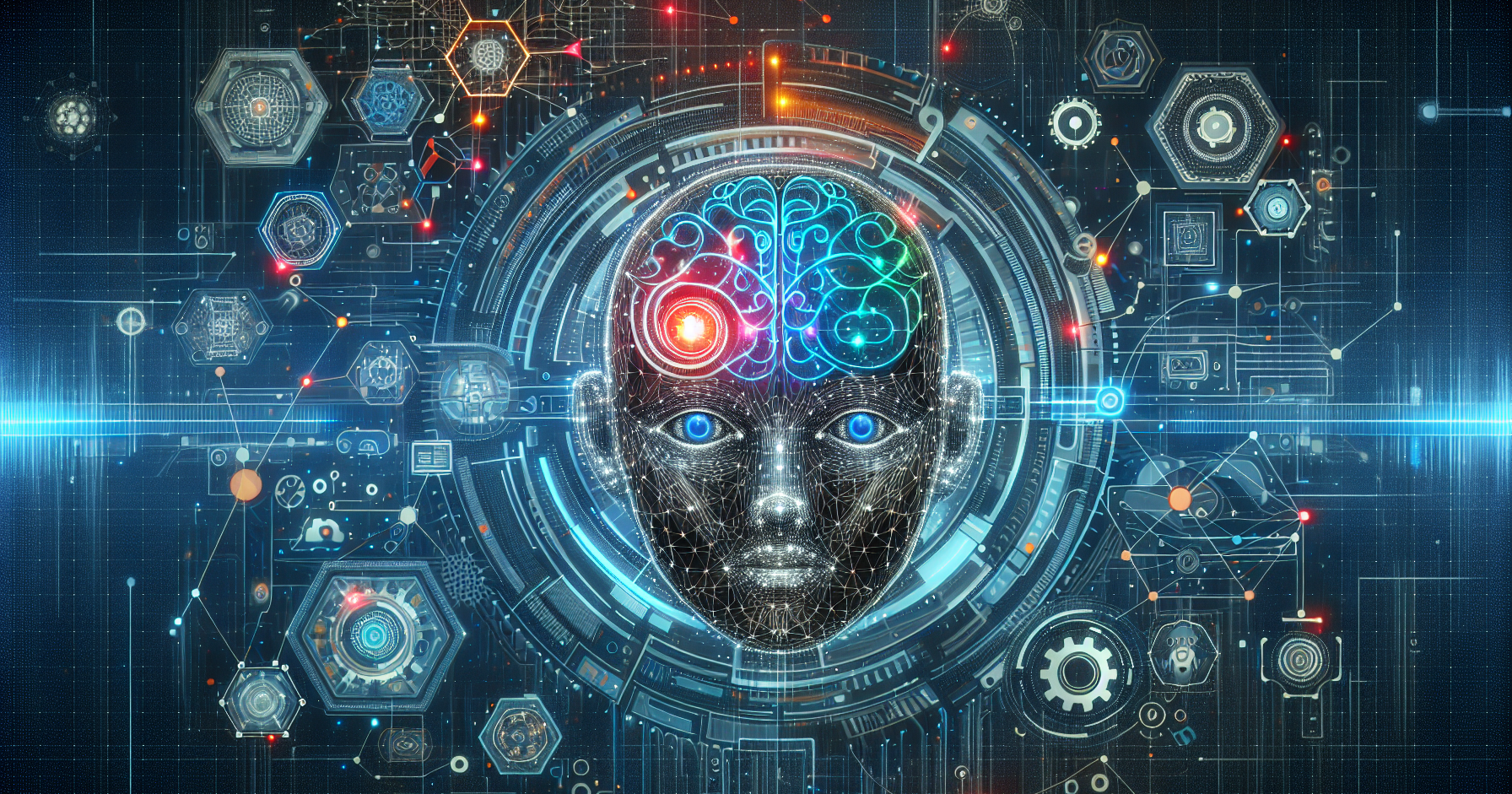
The journey of artificial intelligence began not with silicon brains but with conceptual frameworks, laying the groundwork for what was once considered science fiction. Early AI research, emerging from the Dartmouth Workshop in 1956, focused on symbolic AI, aiming to replicate human intelligence through logical reasoning and explicit rules. Systems like expert systems, such as MYCIN in the 1970s, exemplified this approach by encoding vast amounts of domain-specific knowledge and inference rules to diagnose diseases. These programs operated on a “knowledge base” and an “inference engine,” meticulously crafted by human experts. LISP, a programming language designed specifically for AI, became synonymous with this era, facilitating symbolic manipulation. While these systems achieved impressive feats within their narrow domains, they were inherently brittle, struggling with ambiguity, common sense reasoning, and the sheer volume of knowledge acquisition required for real-world problems. The “AI winter” of the 1980s highlighted these limitations, prompting a fundamental shift in methodology.
The paradigm began to pivot towards machine learning, moving away from explicitly programmed rules to systems that could learn patterns directly from data. This shift was revolutionary, allowing AI to tackle problems too complex or nuanced for human-coded logic. Machine learning encompasses several core methodologies: supervised learning, where models learn from labeled datasets (e.g., images tagged as “cat” or “dog”); unsupervised learning, which uncovers hidden patterns in unlabeled data (e.g., clustering customer segments); and reinforcement learning, where an agent learns through trial and error by interacting with an environment and receiving rewards or penalties. Early algorithms like decision trees, support vector machines (SVMs), and various regression analyses became foundational, demonstrating the power of statistical methods to generalize from examples. This data-driven approach proved more robust and scalable than its symbolic predecessors, paving the way for the next wave of AI innovation.
The true renaissance of AI arrived with deep learning, a specialized subset of machine learning inspired by the structure and function of
Related Articles
The Ethics of Multimodal AI Development
The Ethics of Multimodal AI Development: Navigating a Complex Landscape Multimodal AI, the integration of multiple data modalities…
 aiptstaff
Transforming Work: How OpenAI is Redefining Productivity
The advent of artificial intelligence has consistently pushed the boundaries of human capability, but no single entity has…
aiptstaff
The Art of the Trim: Why AI Token Optimization is the New Must-Have Skill
Tired of hitting context limits and blowing your budget? We explore the latest trends in AI token optimization,…
aiptstaff
Leave a Reply