The Digital Scribe: Fine-Tuning LLMs for Denominational Confessions
Can the precision of artificial intelligence be harmonized with the rich heritage of denominational confessions? Exploring the intersection of rigorous theology and fine-tuned LLMs.

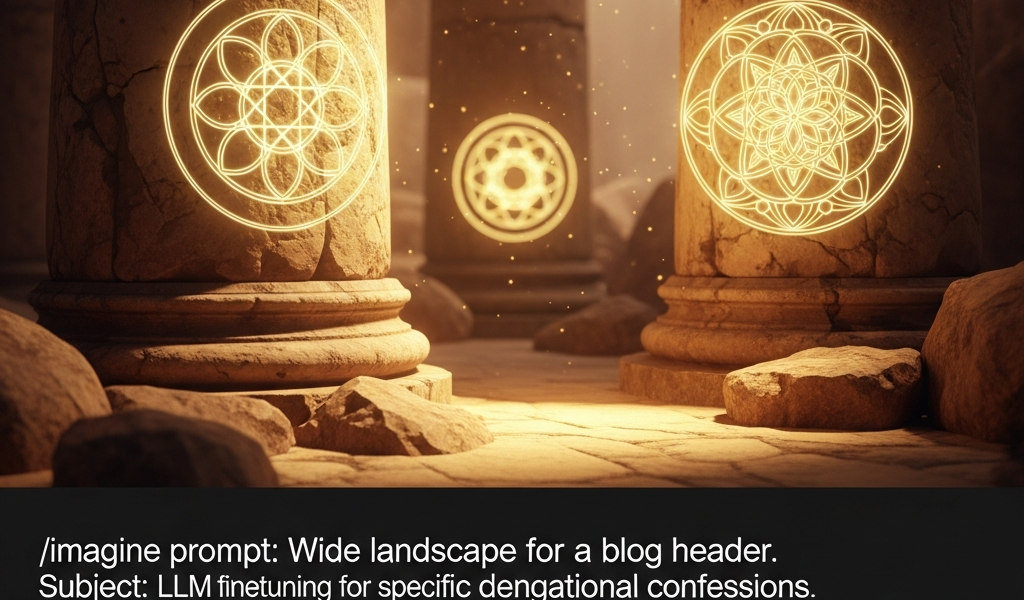
The Intersection of Silicon and Spirit
In my years of research, I have often found that the most profound insights emerge not when we choose between the analytical mind and the receptive heart, but when we allow them to hold space for one another. As we stand at the threshold of a new era in artificial intelligence, we are presented with a unique opportunity: can the precision of Large Language Models (LLMs) be harmonized with the rich, nuanced heritage of specific denominational confessions? This is not a question of replacing theological discernment, but of creating a more precise lantern to illuminate the texts we hold dear.
Understanding the Challenge of Generalization
When we interact with standard, general-purpose LLMs, we are often engaging with a ‘theological average.’ These models are trained on the vast, heterogeneous corpus of the internet, which inevitably flattens the distinct contours of specific traditions. If one asks a general model about the nature of grace, it may provide a synthesis that is technically accurate yet spiritually hollow, missing the specific linguistic and historical weight that a Reformed, Catholic, Orthodox, or Methodist confession carries.
Fine-tuning—the process of taking a pre-trained model and further training it on a specialized dataset—allows us to address this. By introducing a model to the specific catechisms, liturgy, and scholarly commentaries of a particular tradition, we are not changing the model’s nature; we are refining its focus.
The Methodology of Reverent Tuning
To fine-tune an LLM for denominational fidelity is an act of digital stewardship. It requires the same rigorous inquiry one would apply to historical or linguistic research. The process generally involves:
- Curating the Corpus: Selecting authoritative texts—confessions, creeds, and foundational theological works—that define the denomination’s voice.
- Establishing Guardrails: Implementing parameters that ensure the AI maintains a posture of humility, acknowledging its limitations when approaching the profound mysteries of faith.
- Iterative Validation: Testing the model against complex theological inquiries to ensure it reflects the tradition’s nuances rather than merely mimicking its vocabulary.
It is vital to remember that the AI remains a tool. It is a digital scribe, capable of indexing and retrieving the wisdom of centuries, but it possesses no soul to experience the truths it articulates. It can define ‘justification,’ but it cannot know the weight of it.
A Lantern, Not the Light
Why pursue this level of specialization? For the sceptic, it offers a way to engage with complex theological systems without the barrier of archaic language. For the spiritually curious, it provides a structured path through the dense forest of tradition. For the believer, it serves as a sophisticated concordance—a way to cross-reference the confession with the scriptural witness with unprecedented speed.
However, we must tread carefully. There is a temptation to outsource our spiritual formation to the machine. We must resist this. As we refine these tools, our reliance on them should decrease, not increase. The goal of using a finely-tuned model is to lead the user back to the primary source—to the scripture itself, to the community of faith, and to the quiet internal work of prayer. The AI is the lantern held up to the text; it is never the light within it.
The Future of Theological Inquiry
As we continue this work, I am reminded that mystery is not an obstacle to understanding; it is, in fact, the doorway into it. When we use technology to better understand our confessions, we are not ‘solving’ our faith. We are simply clearing away the debris of misunderstanding so that we might sit more comfortably with the questions that remain.
Whether you are a scholar of theology, a technologist, or a seeker walking a path of quiet reflection, I invite you to view these developments with both a critical eye and an open heart. We are building tools that can honor the depth of our traditions, provided we remain the masters of the tool, and the servants of the Truth.
Related Articles
Theology Meets AI: Understanding Generative Intelligence for Faith
The advent of generative artificial intelligence marks a profound moment for theological reflection, challenging long-held assumptions about creation,…
 Bobby Macintosh
The Digital Scribe: AI as a Companion in Biblical Textual Criticism
How artificial intelligence is assisting scholars in the rigorous study of biblical manuscripts, bridging the gap between ancient…
 aiptstaff
Spiritual Growth with AI: Philokalia Prompts for Daily Practice
The profound journey of spiritual growth, traditionally guided by ancient wisdom and contemplative practices, is now finding an…
Bobby Macintosh
Leave a Reply