The Great AI Handshake: Why Interoperability Is the Next Big Thing
AI agents are brilliant, but they’re currently trapped in silos. We dive into the recent developments in interoperability standards that are finally helping them talk to each other.

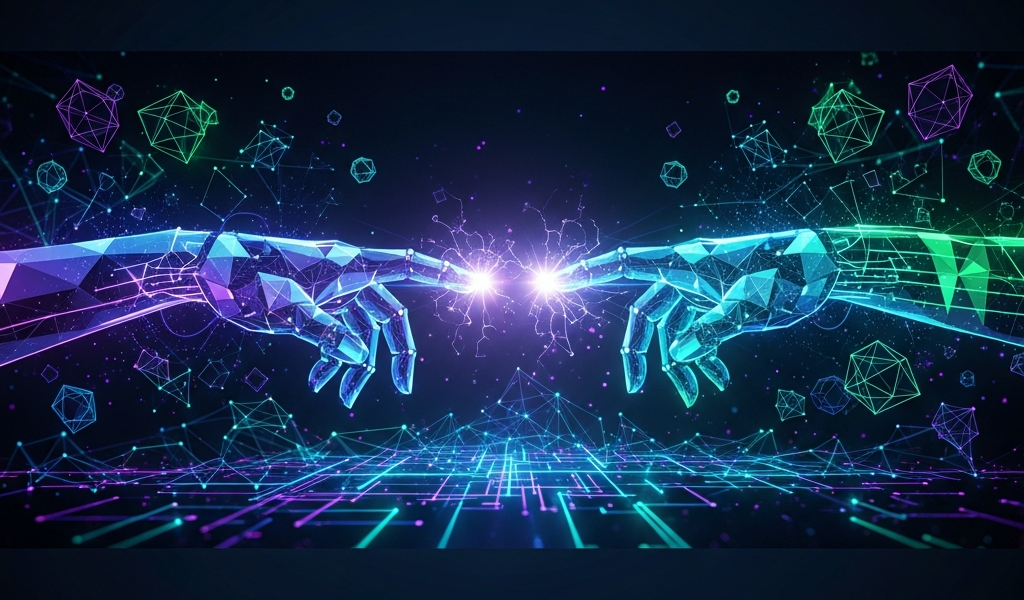
The Tower of Babel Problem
Let’s be honest: right now, the AI landscape feels a bit like a high-stakes dinner party where everyone is speaking a different language. You’ve got your brilliant AI agents—some specialized in coding, others in data analysis, and some just really good at booking travel—but they struggle to talk to each other. It’s frustrating, isn’t it? We’ve built these digital geniuses, but they’re trapped in their own silos.
That’s where AI agent interoperability comes in. It’s the “handshake” protocol that allows these disparate systems to exchange information, delegate tasks, and actually work together. Think of it as the internet’s TCP/IP moment, but for autonomous agents. If we get this right, we aren’t just looking at better chatbots; we’re looking at an ecosystem where agents can collaborate to solve complex problems without human hand-holding.
The IEEE P3119 Standard: Setting the Ground Rules
The biggest news recently is the push from the IEEE to standardize how these agents communicate. Their P3119 project is essentially trying to create a universal “lingua franca” for AI agents. Why does this matter? Because without a standard, every company is building their own proprietary “walled garden.”
- Discovery: How does an agent find another agent that can help it?
- Capability Negotiation: How do they agree on what tasks can be performed?
- Security & Trust: How do we ensure Agent A doesn’t do something malicious when it connects to Agent B?
The IEEE is tackling these head-on, aiming to create a framework that ensures when Agent A says “I need this data processed,” Agent B understands exactly what that means, regardless of who built it.
Microsoft, OpenAI, and the Protocol Wars
It’s not just academic bodies getting involved. The tech giants are playing a fascinating game of chess here. Microsoft and OpenAI have been quietly pushing their own frameworks through initiatives like the Agent Protocol. If you’ve spent any time on GitHub lately, you might have seen the documentation for this. It’s an open-source specification designed to standardize how agents interact with their environments and each other.
Why are they doing this? It’s simple: if your protocol becomes the industry standard, you essentially control the foundation of the agent economy. It’s a classic platform play, but with a twist—they’re making it open source to encourage rapid adoption. It’s a smart move. They know that a fragmented market helps no one, but a market built on their “language” helps them immensely.
The Rise of Decentralized Agent Networks
Then there’s the wild west: the decentralized crowd. Projects like Fetch.ai and various blockchain-based agent networks are arguing that we don’t need a central “boss” to dictate standards. Instead, they’re betting on decentralized registries where agents can list their capabilities and negotiate contracts autonomously.
It’s a bit more “cyberpunk,” but the logic holds water. If you want a truly global, permissionless AI economy, you can’t have a single corporation acting as the gatekeeper. These protocols use distributed ledgers to verify identity and trust—crucial components when you’re letting an AI agent spend your money or access your private files.
What Does This Mean for You?
So, why should you care about this beyond the tech-bro buzzwords? Because interoperability is the bridge between “cool demo” and “actually useful tool.”
Imagine a future where you don’t have to copy-paste data from your CRM into your email client, then into your accounting software. Instead, you have a personal agent that talks to your accounting agent, which talks to your banking agent, and the whole transaction happens while you’re grabbing your second coffee of the morning. That’s the promise of these standards.
We are currently in the “modem screeching” phase of AI agent evolution. It’s loud, it’s messy, and it’s a bit confusing. But behind the scenes, the plumbing is being laid. Keep an eye on the IEEE P3119 progress and the Agent Protocol repositories—that’s where the real revolution is happening. The agents are starting to talk, and soon, they’ll be working for us in ways we’re only just beginning to imagine.
Related Articles
Decoding AI Performance: Understanding Benchmark Results
Decoding AI Performance: Understanding Benchmark Results The rapid evolution of artificial intelligence has made understanding and evaluating model…
 aiptstaff

Beyond the Basics: What’s Actually Happening in Advanced System Prompting
Think of the system prompt as the AI’s 'operating manual.' We explore the latest trends in advanced prompting,…
aiptstaff
AI Revolution: The Latest Innovations from Google DeepMind
The AI Revolution, a transformative epoch characterized by unprecedented technological acceleration, finds one of its most potent engines…
aiptstaff
Leave a Reply