The Robots Are Building the Robots: A Look at Automated Software Lifecycle AI
From self-healing infrastructure to AI-driven requirements gathering, we explore the recent developments in Automated Software Lifecycle AI and what they mean for the future of development.

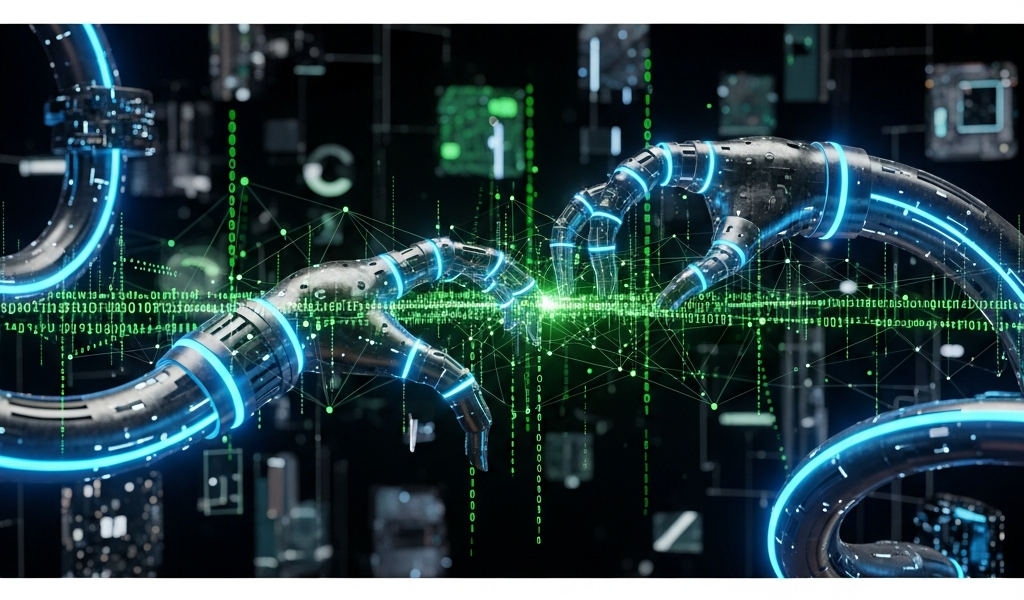
The Shift Toward Autonomous Engineering
Let’s be honest: the software development lifecycle (SDLC) has always been a bit of a juggling act. You’ve got planning, coding, testing, deployment, and maintenance—all while trying to keep technical debt from burying you alive. But lately, things have started to shift. We aren’t just talking about simple CI/CD pipelines anymore. We are entering the era of Automated Software Lifecycle AI, where the machines aren’t just helping us write code; they are beginning to manage the entire ecosystem.
It feels like we’ve crossed a threshold. What was once the domain of ‘future tech’ is now appearing in our daily workflows. If you’ve been feeling like your toolchain is getting a serious upgrade, you aren’t imagining it. Let’s dive into some of the most fascinating recent developments in this space.
1. Self-Healing Infrastructure and ‘Auto-Fix’ PRs
Remember the days when a production outage meant getting paged at 3:00 AM to manually trace a memory leak? Those days are rapidly becoming a relic. Recent advancements in AI-driven observability are changing the game. We are seeing platforms that don’t just alert you to a problem; they analyze the stack trace, identify the offending commit, and—get this—propose a fix.
- Root Cause Analysis: AI agents are now cross-referencing logs with commit history to pinpoint exactly when a regression was introduced.
- Automated Pull Requests: Tools are now generating ‘fix’ branches automatically, allowing developers to simply review and merge rather than hunt for bugs.
- Reduced Mean Time to Recovery (MTTR): By automating the initial triage, teams are seeing recovery times drop from hours to mere minutes.
It’s not quite ‘set it and forget it’ yet—we still need human oversight—but it’s getting remarkably close to having a senior engineer on call 24/7 who never needs coffee.
2. The Rise of Generative Agents in Requirements Engineering
One of the biggest bottlenecks in software development isn’t the coding; it’s the communication. How many times have you built something perfectly, only to realize it wasn’t what the stakeholder actually wanted? AI is stepping into the planning phase, and it’s surprisingly good at it.
Newer AI models are being trained on massive repositories of documentation and project management data. They can now ingest a high-level product requirement and break it down into actionable Jira tickets, architecture diagrams, and even initial boilerplate code. By bridging the gap between ‘business speak’ and ‘developer speak,’ these tools are drastically reducing the friction that usually plagues the start of a project.
3. Predictive Maintenance for Codebases
We’ve all worked in that one codebase—the one where changing a single line in the user profile module somehow breaks the payment gateway. It’s a classic case of tight coupling, and it’s a nightmare to manage. Predictive AI is starting to tackle this head-on.
By analyzing code churn, complexity metrics, and historical bug data, modern AI tools can now flag ‘hotspots’ before they become disasters. Imagine an IDE plugin that says, "Hey, this module is becoming too complex and has a high probability of regression. Here is a refactoring plan." It’s like having a project manager who can actually see into the future of your technical debt.
The Human Element: Are We Still Needed?
With all this automation, it’s natural to wonder: where do we fit in? If the AI is planning, coding, testing, and fixing, what’s left for the humans?
The answer is simple: strategy and taste. AI is fantastic at executing known patterns, but it lacks the intuition to understand the ‘why’ behind a product. It can build the feature, but it can’t tell you if the feature is actually delightful or necessary for your users. As these tools evolve, our role is shifting from ‘manual laborer’ to ‘architect and curator.’ We are moving from writing every line of code to orchestrating complex systems that build themselves.
It’s an exciting time to be in tech. We’re essentially getting superpowers, and while it might feel a little daunting to keep up, the payoff is a lot less time spent on the mundane and a lot more time spent on the creative. So, grab another coffee—the future of development isn’t just arriving; it’s already here, and it’s surprisingly helpful.
Related Articles
The Impact of Google DeepMind: Revolutionizing Industries with AI
Google DeepMind has emerged as a vanguard in artificial intelligence research, fundamentally reshaping our understanding of machine capabilities…
 aiptstaff
Future of Work: Navigating Job Displacement and Embracing AI-Powered Productivity
The Shifting Sands: Understanding Job Displacement in the Age of Automation The future of work is no longer…
aiptstaff
Energy Efficiency in AI Hardware: A Green Computing Imperative
The exponential growth of Artificial Intelligence (AI) and its increasingly complex models, particularly large language models (LLMs) and…
aiptstaff
Leave a Reply