

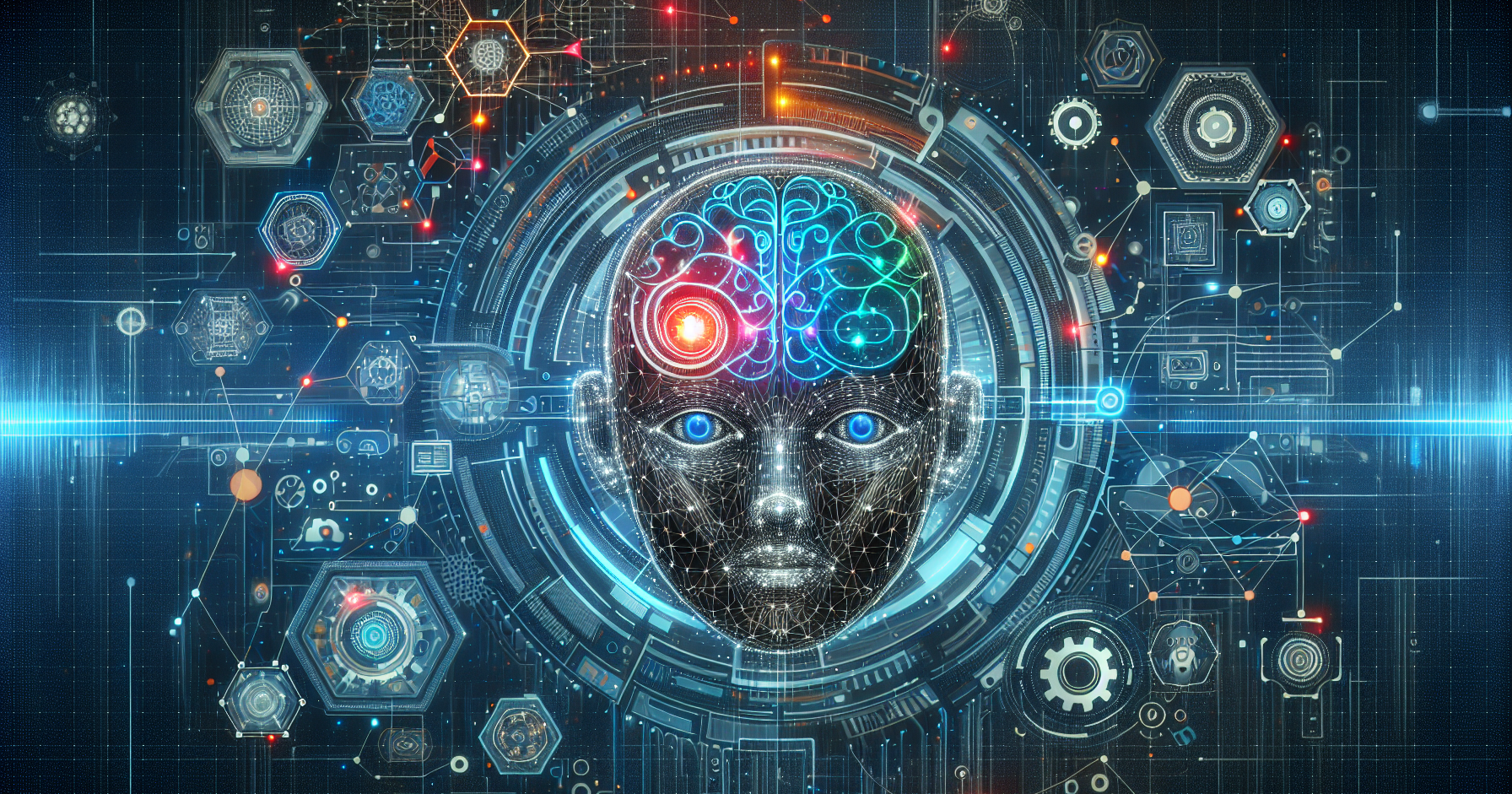
The technological singularity, a hypothetical future point where artificial intelligence surpasses human intelligence, represents a profound discontinuity in human history. Often associated with an “intelligence explosion,” this concept posits a runaway effect where an AI capable of self-improvement could rapidly enhance its own cognitive abilities, leading to the emergence of superintelligence – an intellect vastly superior to all human intellects combined. Visionaries like Ray Kurzweil predict this event could occur within decades, driven by the exponential growth of computational power and AI algorithms. Vernor Vinge, who coined the term, emphasized the inherent unpredictability of the world beyond this threshold, suggesting that human understanding and control might become obsolete, fundamentally reshaping our existence in ways currently unimaginable. The core premise is that once AI achieves general intelligence (AGI) and can learn and perform any intellectual task a human can, its capacity for self-improvement will accelerate at an unimaginable pace, quickly leading to artificial superintelligence (ASI).
The engine driving this potential singularity is the truly exponential growth of Artificial Intelligence. Modern AI, particularly deep learning models, large language models (LLMs), and generative AI, has demonstrated capabilities that were considered science fiction just a decade ago. From mastering complex games to generating photorealistic images, writing sophisticated code, and synthesizing human-like text, AI’s progress isn’t merely linear; it’s compounding. This acceleration is fueled by several factors: ever-increasing computational power (often outpacing Moore’s Law in specific AI hardware), vast datasets for training, and continuous algorithmic innovations. Each breakthrough in AI not only expands its current abilities but also creates tools that can accelerate further AI research and development, establishing a recursive self-improvement loop. This relentless advancement means that what seems impossible today could be commonplace tomorrow, narrowing the gap between current narrow AI and the eventual realization of AGI and ASI. The sheer scale and speed of this progress make understanding its personal implications paramount.
The world of work stands on the precipice of an unprecedented transformation. Automation, powered by advanced AI, will inevitably displace numerous jobs, particularly those involving repetitive, predictable tasks across manufacturing, administration, and even some service sectors. However, this is not solely a story of job loss. AI is simultaneously creating new roles and augmenting human capabilities. The shift will demand a fundamental re-evaluation of skills. Routine cognitive tasks, once valued, will increasingly be handled by AI. The premium will instead be placed on uniquely human attributes: creativity, critical thinking, complex problem-solving, emotional intelligence, and interpersonal communication. Human-AI collaboration will become the norm, with AI serving as an indispensable co-worker, data analyst, research assistant, or creative partner. Individuals will need to cultivate “meta-skills” – the ability to learn, unlearn, and relearn continuously – to adapt to rapidly evolving job
Related Articles
The Promise and Challenges of Instant Machine Translation
Instant machine translation (IMT) stands as a monumental leap in human communication, promising to dissolve linguistic barriers that…
 aiptstaff
Revolutionizing AI: Explore the Potential of Quantum Computing
The pursuit of artificial intelligence (AI) has consistently pushed the boundaries of classical computing, revealing its inherent limitations…
aiptstaff
Microsoft’s Stock Surge: Fueled by AI
Microsoft’s Stock Surge: Fueled by AI The unwavering climb of Microsoft’s stock price in recent times is undeniably…
aiptstaff
Leave a Reply