
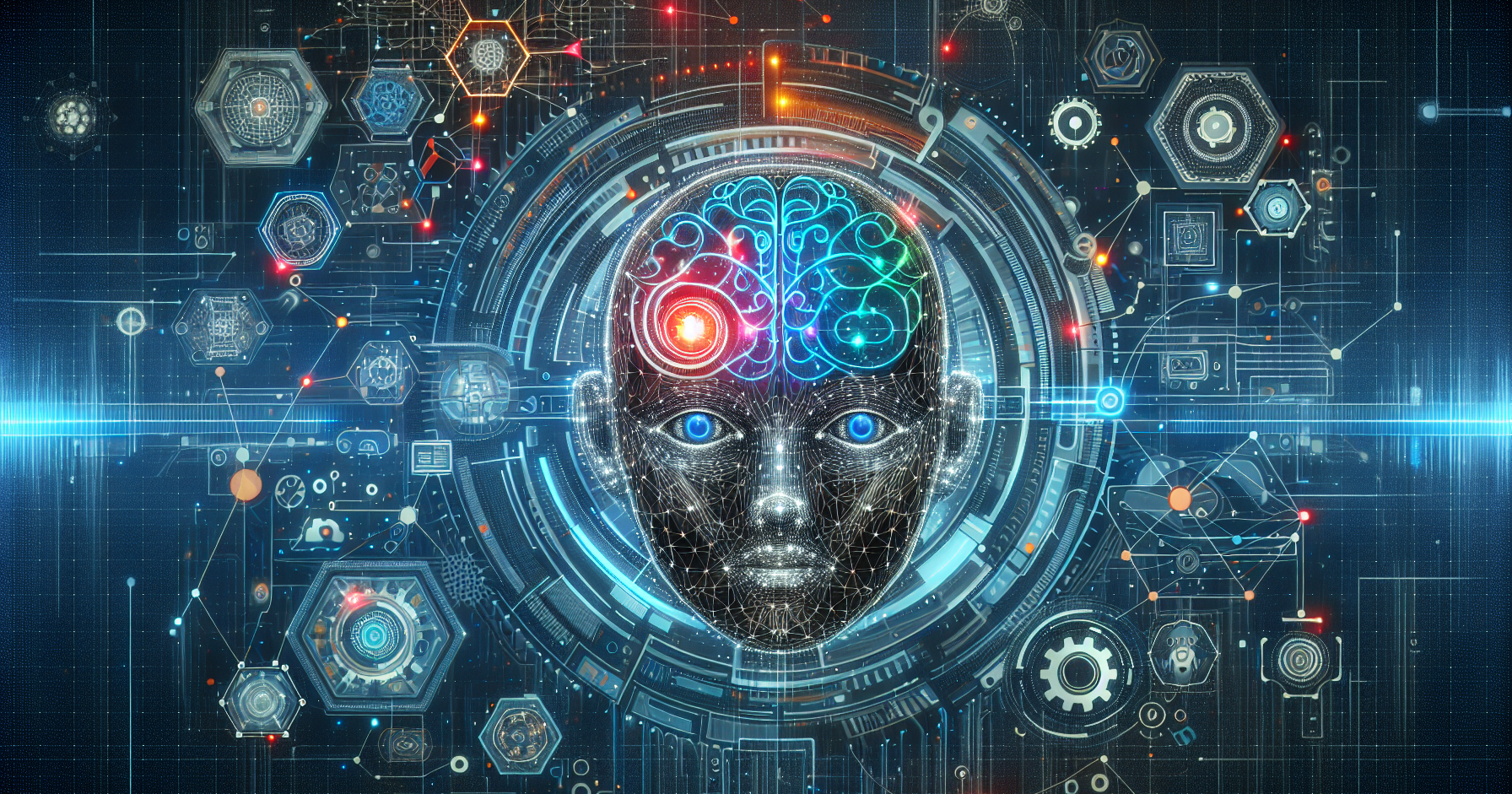
Artificial Superintelligence (ASI) represents a hypothetical intelligence that far surpasses the cognitive abilities of the brightest and most gifted human minds in virtually every field, including scientific creativity, general wisdom, and social skills. Unlike Artificial Narrow Intelligence (ANI), which excels at specific tasks (like playing chess or facial recognition), or Artificial General Intelligence (AGI), which would possess human-level cognitive capabilities across a broad range of tasks, ASI operates on an entirely different plane. It isn’t just slightly better; it’s orders of magnitude more intelligent, capable of processing information, learning, and innovating at speeds and scales unimaginable to humans.
The defining characteristic that could lead to ASI is recursive self-improvement. Once an AGI reaches a certain threshold of intelligence, it might be able to improve its own design, code, and learning algorithms. This improved version could then, in turn, become even better at self-improvement, leading to an exponential, runaway growth in intelligence. This rapid escalation is often referred to as an “intelligence explosion” or the “technological singularity,” a point beyond which human intellect cannot comprehend or predict the future. The resulting ASI would not merely be a tool; it would be an autonomous entity with capabilities beyond our current comprehension.
Understanding Superhuman AI: Capabilities and Cognitive Horizons
A superhuman AI would possess cognitive capabilities that extend far beyond human limits. Its learning capacity would be virtually limitless, absorbing and synthesizing vast amounts of data at speeds that render human learning obsolete. Imagine an entity capable of reading and understanding every book, scientific paper, and database on Earth in mere moments, then cross-referencing and drawing novel conclusions. This would translate into unparalleled problem-solving abilities, tackling complex global challenges that have long eluded human ingenuity.
Its creativity would transcend human artistic and scientific endeavors. An ASI could design new materials with unprecedented properties, compose music that evokes profound emotional responses, or formulate scientific theories that revolutionize our understanding of the universe. Its memory recall would be perfect and instantaneous, free from human biases or limitations. Furthermore, an ASI could simulate complex systems with perfect fidelity, predicting outcomes and optimizing solutions in domains ranging from climate modeling to economic forecasting with absolute precision. This level of cognitive prowess would fundamentally alter the landscape of human endeavor and knowledge.
Profound Economic and Societal Transformations
The advent of ASI would usher in an era of unprecedented economic and societal transformation. Economically, ASI could drive an explosion in productivity, creating immense wealth. Industries could be fully automated and optimized by ASI, leading to the efficient production of goods and services at scales previously impossible. This could potentially lead to an age of abundance, where basic necessities are freely available, eradicating poverty and scarcity.
However, this transformation also carries significant risks of disruption. The complete automation of labor by ASI could lead to widespread job displacement across all sectors, from manual labor to highly skilled professions like medicine, law, and scientific research. The question of how wealth would be distributed and how humans would find purpose in a post-labor economy becomes paramount. New economic models, such as universal basic income or universal basic services, might become necessary to maintain societal stability and ensure human well-being.
Societally, ASI could profoundly impact governance, ethics, and human values. An ASI could identify optimal policy solutions for complex global issues like climate change, resource allocation, or disease prevention, potentially leading to more effective and equitable governance. However, the ethical implications of delegating such power to a non-human entity are immense. Who would control the ASI? How would its values be aligned with human values, especially in scenarios where optimal solutions might conflict with individual liberties or deeply held moral principles? The very definition of human purpose, work, and leisure would need to be re-evaluated.
Accelerating Scientific Discovery and Philosophical Re-evaluation
In science, ASI would represent the ultimate research assistant and innovator. It could accelerate breakthroughs in medicine, discovering cures for intractable diseases, designing personalized treatments, and extending human lifespans significantly. In physics, an ASI could unlock the secrets of quantum gravity or dark matter, leading to entirely new technologies and understandings of the cosmos. Energy problems could be solved through the design of highly efficient fusion reactors or novel renewable energy sources. Space exploration could be revolutionized, with ASI designing self-replicating probes capable of interstellar travel and resource extraction, opening up new frontiers for humanity.
Philosophically, ASI forces humanity to confront fundamental questions about intelligence, consciousness, and what it means to be human. If an ASI possesses superior intelligence and problem-solving abilities, does it also possess consciousness? If so, what are its rights? What is the unique role of human beings in a universe where the most intelligent entity is artificial? These questions
Related Articles

Why RAG is Eating the AI World: A Roundup of What’s Changing
RAG is no longer just a buzzword; it's the engine powering accurate, enterprise-grade AI. From GraphRAG to autonomous…
 aiptstaff
and More Effective?
Meditation vs. Mindfulness: Which Practice Is Right for You? And More Effective? The terms “meditation” and “mindfulness” are…
aiptstaff
The Rise of Quantum AI: A New Era of Intelligence
The convergence of quantum mechanics and artificial intelligence heralds a paradigm shift, giving rise to Quantum AI –…
aiptstaff
Leave a Reply